Shooting Near the White House Sparks Renewed Concerns Over Security in Washington
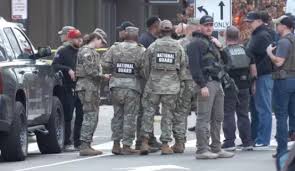
A shooting near the White House left several people injured, including National Guard members, rattling the sense of security in one of the most heavily protected zones in the United States. The incident, which occurred just a short distance from the presidential residence, reignited debate over the strength and reliability of security measures surrounding the country’s political center.
A Violent Shock in a Symbolic Location
Gunfire erupted in a busy area close to the executive mansion, sending bystanders scrambling for cover as emergency sirens echoed through the streets. Witnesses described a scene marked by panic, multiple gunshots, and a rapid surge of law enforcement officers rushing to contain the situation. First responders deployed ambulances, medical teams, and aerial support as authorities moved quickly to secure the area.
Among the injured were at least two National Guard members stationed as part of a standard security structure. Their serious condition intensified public concern and added urgency to the unfolding investigation. Police detained a suspect shortly after the attack, but officials are continuing to examine whether others were involved and what may have motivated the violence.
Security Breach in a High-Protection Zone
The proximity of the shooting to the White House raised immediate alarms about vulnerabilities in a zone fortified with checkpoints, surveillance systems, and constant monitoring. Analysts emphasized that the incident exposed gaps in what is often perceived as an impenetrable security network.
The symbolic shock was equally profound. An area long associated with stability and control suddenly became the scene of violence, disrupting the confidence of workers, residents, and tourists who move through the neighborhood daily. For many, the event challenged the assumption that such a location is immune to the kinds of attacks seen elsewhere in urban environments.
City Responds with Heightened Alert
In the aftermath, nearby schools, federal buildings, and businesses received emergency directives as part of precautionary measures. Streets were closed, traffic rerouted, and Washington’s central district experienced a heavy influx of police activity. The atmosphere grew tense as investigators worked methodically to reconstruct the events and evaluate potential ongoing risks.
For residents of the capital, the shooting highlighted a growing concern: rising urban violence reaching even the most fortified corners of the country. The incident underscored the reality that, despite advanced technology and trained personnel, unexpected acts of aggression continue to challenge the limits of public safety.
An Ongoing Security Challenge
The attack reflects a persistent dilemma faced by major political capitals around the world—balancing the flow of everyday life with the need for rigorous security. Enhanced patrols and monitoring systems remain crucial, yet they cannot fully eliminate unpredictable threats in an era defined by rapid and often unanticipated violence.
As authorities work to determine the shooter’s motives and implement preventive measures, one question looms over Washington: how can absolute protection be ensured in a place meant to represent national stability and strength?
The investigation continues, but the impact of the incident has already reverberated far beyond the immediate scene, prompting renewed scrutiny of security protocols at the heart of American political power.