Unprecedented Crisis: U.S. Military Action Announcement in Venezuela Shakes the Global Stage
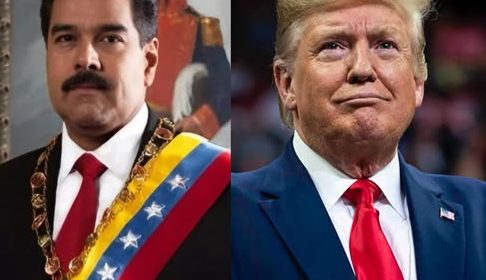
The international political and diplomatic landscape was jolted by an announcement that sharply escalated tensions across the Americas. The president of the United States, Donald Trump, stated that U.S. forces had carried out a direct military operation on the territory of Venezuela, claiming that the action resulted in the capture of Venezuelan president Nicolás Maduro. The declaration triggered immediate reactions from governments, international organisations and global markets, while raising deep uncertainty about the next geopolitical steps.
According to the statement issued by the White House, the operation was swift and strategically planned, targeting sites deemed sensitive by U.S. authorities. Reports emerged of explosions in different areas of Caracas, causing panic among residents and leading to temporary disruptions of basic services in parts of the city. Initial accounts pointed to the use of aircraft and specialised troops, in what U.S. officials described as a precise and controlled action.
The claim that Maduro had been captured marks a historic rupture in relations between Washington and Caracas, long defined by ideological confrontation, economic sanctions and mutual accusations. Since consolidating power, Maduro has become one of the most controversial leaders in the region, accused by domestic opponents and foreign governments of steering Venezuela into a severe economic, social and humanitarian crisis. Conversely, allies of the Venezuelan government have denounced the U.S. action as an illegitimate intervention and a direct violation of national sovereignty.
Inside Venezuela, the impact of the announcement was immediate. Military forces moved to reinforce security around strategic facilities, while opposition figures renewed calls for a rapid political transition. Supporters of the government, meanwhile, mobilised rhetoric of resistance, framing the episode as an act of foreign aggression. The atmosphere across the country quickly deteriorated into one of acute instability, with growing doubts over who effectively controls political and military power.
On the international front, reactions were cautious and, in some cases, openly alarmed. Leaders from different regions urged restraint, dialogue and clarification, warning that the situation could spiral into a broader conflict. Analysts in international relations stressed that, if confirmed, such an operation would set a delicate precedent by involving a major military power directly in an action against a sitting head of state in South America.
Economic repercussions were also swiftly felt. Financial markets responded with heightened volatility, including fluctuations in oil prices and regional currencies. Investors began closely monitoring the risk of prolonged instability, which could disrupt energy supply chains and commercial agreements well beyond Venezuela’s borders.
Despite the gravity of the statements, significant uncertainties remain. There has been no independent confirmation regarding Maduro’s actual status or the full scope of the military operation. Conflicting information and unanswered questions continue to surround the episode, underscoring the fragility of the moment.
The announcement opens a new and unpredictable chapter in the Venezuelan crisis, placing the country at the centre of a tense geopolitical chessboard and putting the international community on alert for a potential reshaping of political power in the region.