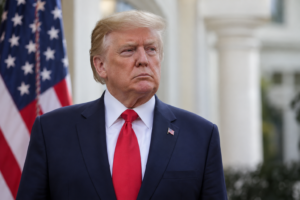
Trump Welcomes Xi to Washington as Trade, Technology and Global Security Dominate Talks
Xi Jinping
U.S. President Donald Trump welcomed Chinese President Xi Jinping to Washington on Wednesday for a three-day visit expected to focus on some of the most consequential issues shaping relations between the world’s two largest economies.
The visit comes at a time of intense economic and strategic competition between Washington and Beijing. While both governments have sought to maintain diplomatic channels and prevent disputes from escalating, significant disagreements remain over trade, technology, Taiwan and international security.
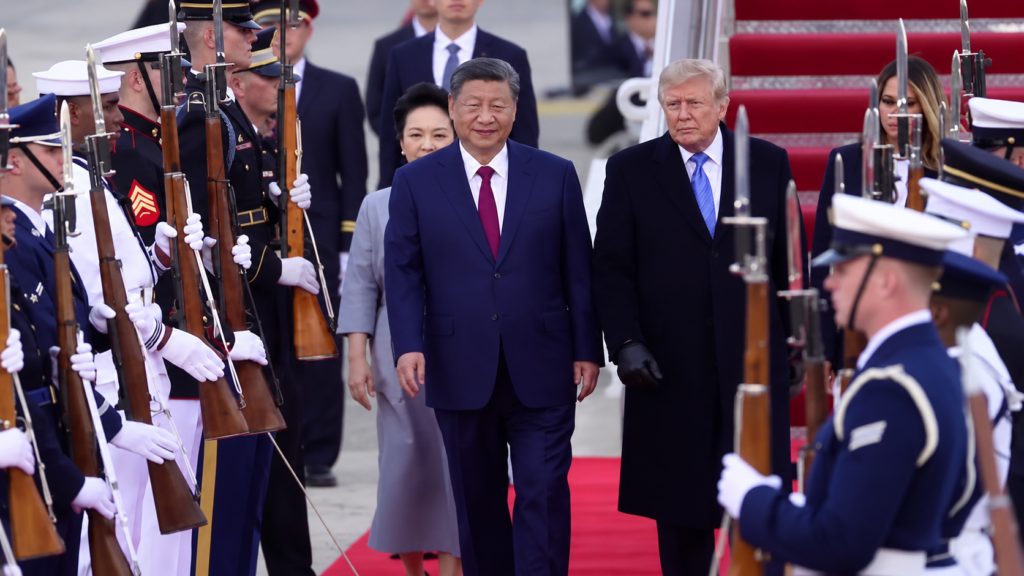
Xi’s arrival was marked by an elaborate reception, reflecting the importance the Trump administration has placed on the meeting. The Chinese leader and his wife were welcomed upon arrival at Joint Base Andrews in Maryland, with ceremonial events also planned in Washington.
Behind the formalities, however, both governments face a difficult negotiating agenda.
Trade is expected to be one of the central topics. The United States and China have spent years confronting each other over tariffs, market access and economic policies. A temporary trade truce has provided some stability, but negotiations remain important as both countries seek to protect domestic industries while maintaining access to major international markets.
Technology is another critical area. Washington and Beijing are competing for leadership in sectors including semiconductors and artificial intelligence. Restrictions involving advanced chips and other sensitive technologies have become increasingly connected to national security concerns.
Artificial intelligence could nevertheless provide an opportunity for dialogue. The rapid development of increasingly powerful AI systems has raised questions about safety, regulation and military applications, creating potential areas where communication between the two governments could become important.
Taiwan remains among the most sensitive issues in the relationship. Beijing considers the island part of Chinese territory, while the United States maintains unofficial relations with Taiwan and supplies it with defensive weapons. Any discussion involving Taiwan is therefore closely watched by governments across Asia.
Military communication is also expected to receive attention. Both countries maintain significant military capabilities in the Indo-Pacific, where encounters between aircraft and naval vessels have periodically increased concerns about accidental confrontation. Maintaining direct communication between military officials could help prevent incidents from developing into broader crises.
Other issues on the agenda include international security, the situation involving Iran, cooperation against drug trafficking and cases involving foreign citizens detained in China.
The meeting represents another attempt by Washington and Beijing to manage a relationship defined by both economic interdependence and strategic rivalry. Neither side is expected to resolve the most significant disagreements during a single visit.
Still, agreements in specific areas — particularly trade, technology and military communication — could provide indications of how the two governments intend to manage their competition in the years ahead.
For Trump and Xi, the challenge is therefore broader than producing immediate agreements. The talks will also test whether the United States and China can establish mechanisms capable of limiting confrontation while continuing to compete for economic, technological and geopolitical influence around the world.