
NASA Launches Cost-Effective Mission to Save Swift Space Telescope Instead of Replacing It
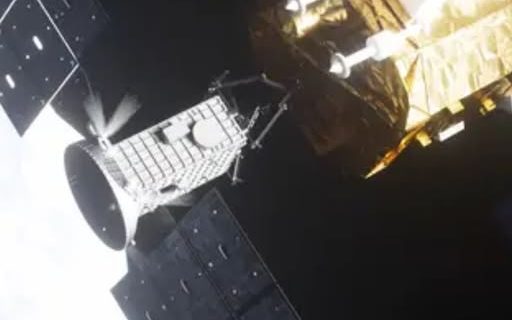
WASHINGTON – NASA is set to begin an ambitious mission this week aimed at extending the operational life of the Swift Space Telescope, a move that could save hundreds of millions of dollars compared to building and launching a replacement observatory.
The rescue mission, valued at approximately US$30 million, will rely on an autonomous robotic spacecraft developed by startup Katalyst Space Technologies. The spacecraft is designed to rendezvous with Swift, capture the aging observatory, and boost it from its current orbit of roughly 360 kilometers above Earth to a safer altitude of about 600 kilometers.
Swift has been gradually losing altitude due to increased solar activity, which has expanded Earth’s upper atmosphere and intensified atmospheric drag on satellites in low-Earth orbit. Without intervention, the observatory faces the risk of eventually re-entering the atmosphere, bringing an end to one of NASA’s most productive space science missions.
Originally launched to detect and study gamma-ray bursts—the most energetic explosions in the universe—Swift has also played a vital role in observing supernovae, black holes, neutron stars, and other high-energy cosmic events. Extending its lifespan would allow scientists to continue gathering valuable astronomical data without the expense and lengthy development process required for a new space telescope.
The mission presents a significant technological challenge because Swift was never designed to be serviced in orbit. Unlike spacecraft built with maintenance in mind, the telescope lacks dedicated docking mechanisms or repair interfaces, requiring the robotic vehicle to perform a highly precise capture and orbital maneuver.
If successful, the operation could mark a turning point for the U.S. space industry by demonstrating that robotic servicing missions can safely prolong the life of satellites and scientific observatories that were not originally intended for maintenance. Such capabilities could dramatically reduce costs while improving the sustainability of future space operations.
NASA believes the project could pave the way for a new generation of in-orbit servicing missions, including satellite repairs, orbital upgrades, refueling operations, and debris mitigation. These technologies are increasingly viewed as essential as the number of spacecraft operating in Earth’s orbit continues to grow.
Beyond preserving an important scientific asset, the Swift rescue mission represents a broader shift in space exploration strategy—from replacing aging spacecraft to maintaining and upgrading them whenever feasible. Should the mission succeed, it may establish a new model for extending the operational life of valuable orbital infrastructure while delivering significant savings for future space programs.