Arctic Pressure Point: Trump Escalates Rhetoric Over Greenland and Transatlantic Security
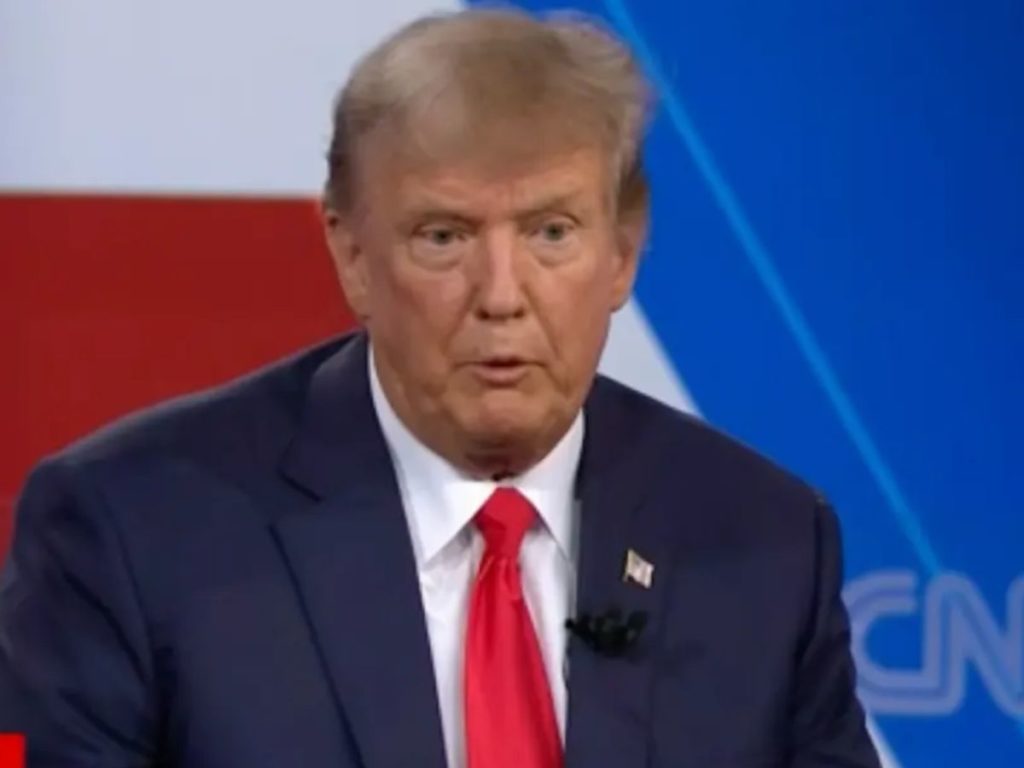
The strategic dispute over Greenland has returned to the center of international politics after Donald Trump publicly accused Denmark of failing to protect the Arctic territory from what he described as growing Russian influence. Framing the issue as a matter of urgency, the U.S. president declared that “the time has come” for decisive action, reigniting a controversy that strains relations between Washington and its European allies.
Greenland, an autonomous territory within the Danish kingdom, occupies a vast and sparsely populated area of the Arctic, but its geopolitical value has grown significantly in recent years. Its location places it at the crossroads of emerging Arctic shipping routes and near strategic military corridors linking North America, Europe, and Eurasia. Trump has repeatedly argued that the island is critical to U.S. national security and that current arrangements are insufficient to counter the presence of rival powers.
In his remarks, the American president asserted that Denmark ignored long-standing warnings about security risks in the region. He suggested that NATO had raised concerns over Arctic defense for years, while Copenhagen failed to invest adequately in deterrence. According to Trump, this alleged inaction opened space for Russia to expand its influence, particularly through military signaling and Arctic infrastructure.
The statements were met with firm resistance in Europe. Danish officials reiterated that Greenland is not for sale and emphasized that sovereignty issues cannot be dictated by external pressure. Leaders in Copenhagen stressed that decisions about the territory’s future must involve the Greenlandic population, which already exercises broad self-governance. They also underscored that Denmark remains a committed ally within NATO and rejects claims of negligence.
Beyond rhetoric, Trump hinted at economic measures to reinforce his position. He suggested that the United States could impose trade penalties on partners unwilling to align with Washington’s Arctic strategy. Such threats raised alarms across Europe, where officials warned that using tariffs against allies would undermine trust and weaken the transatlantic partnership at a moment of heightened global instability.
The dispute also reflects a broader contest for influence in the Arctic. Melting ice has increased access to natural resources such as rare minerals and hydrocarbons, while opening new maritime routes. Alongside Russia, China has shown growing interest in the region through scientific missions and long-term economic planning, adding another layer of complexity to the strategic landscape.
Within Greenland itself, local leaders have maintained a cautious and assertive stance. They reaffirm that the island’s future must be determined by its people, in accordance with international law and existing autonomy arrangements. While security cooperation with allies is welcomed, any discussion of sovereignty transfer is firmly rejected.
Analysts view the renewed confrontation as more than a bilateral disagreement. It highlights shifting power dynamics in the Arctic and exposes fractures within alliances traditionally united by shared security goals. By elevating Greenland to a central strategic issue, Trump has forced allies to confront uncomfortable questions about defense responsibilities, economic leverage, and respect for territorial integrity.
As the Arctic gains prominence on the global stage, the outcome of this dispute will resonate far beyond the icy expanse of Greenland. It will shape not only U.S.–European relations, but also the balance of power in a region increasingly seen as one of the world’s next great geopolitical frontiers.