Trump Conditions Financial Support for Argentina on Its Continued Shift to the Right
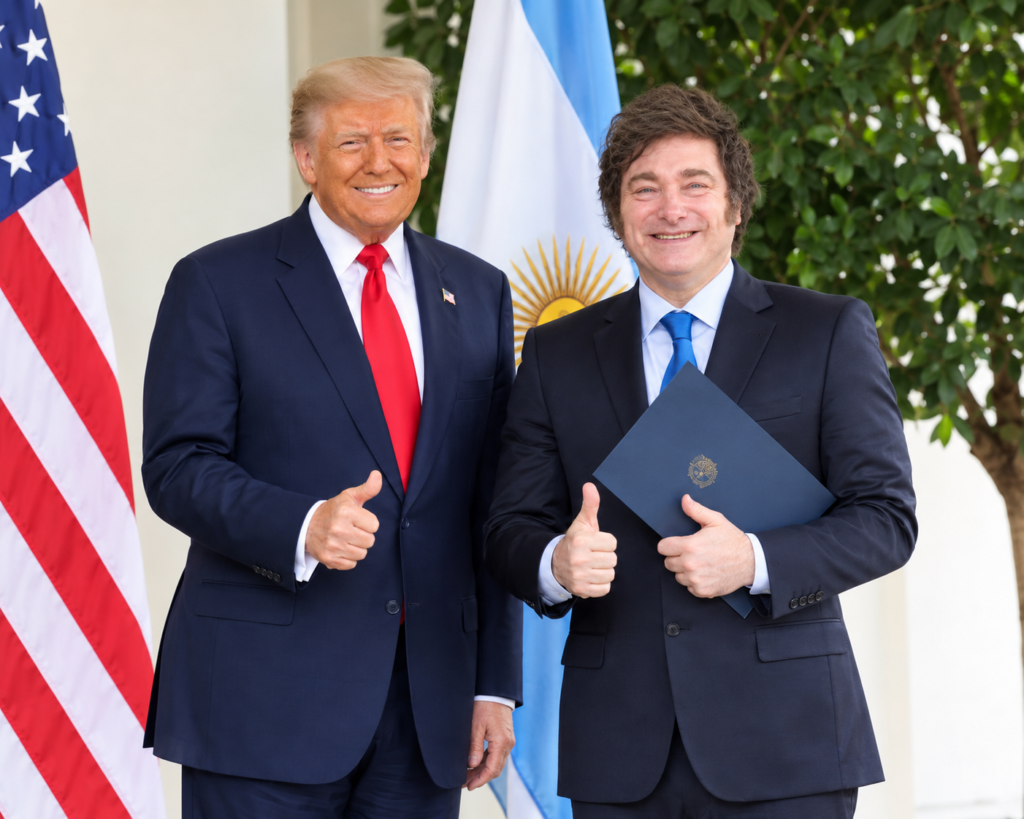
U.S. ambassador Peter Lamelas says future investment and financing will depend on Argentina maintaining its right-wing political direction, as Washington signals up to $20 billion in potential funding and investment.
The administration of U.S. President Donald Trump has linked future financial support for Argentina to the country maintaining its current right-wing political orientation, according to remarks by U.S. Ambassador to Argentina Peter Lamelas on October 20, 2026.
Speaking in Neuquén, a key energy-producing province, Lamelas said the United States would continue supporting Argentina if the country remained on a right-wing path rather than moving toward the left. His comments highlight the growing connection between Washington’s financial and economic engagement with Buenos Aires and the political direction of President Javier Milei’s government.
The ambassador’s remarks come as the United States signals the possibility of up to $20 billion in investment and financing for Argentina before the end of 2027. The potential support could help develop strategic sectors, particularly energy, oil, natural gas and critical minerals.
Energy and investment at the center of the relationship
Argentina’s energy resources, especially the Vaca Muerta shale formation, have become a central element of its economic strategy. The country hopes to expand oil and gas production, attract foreign capital and increase exports to strengthen its finances.
U.S. support could involve investment projects, loans and financing mechanisms through institutions such as the Export-Import Bank of the United States and the U.S. International Development Finance Corporation. The proposed $20 billion should not be understood simply as a direct transfer of cash to the Argentine government; the amount refers to potential investment and financing opportunities.
For Washington, closer economic ties with Argentina also carry strategic importance. The United States has sought to strengthen its presence in Latin America, where China has expanded its commercial, financial and infrastructure relationships.
A precedent set in 2025
The latest statements follow a major financial intervention in 2025, when the United States announced a currency swap arrangement of up to $20 billion with Argentina’s central bank amid pressure on the country’s economy and financial markets.
At the time, Trump publicly questioned whether Washington should continue providing support if Milei’s political movement lost the legislative elections. He indicated that U.S. generosity would depend in part on the electoral outcome.
Milei’s La Libertad Avanza party subsequently won the legislative elections, strengthening its position in Congress and providing political momentum for the government’s economic agenda.
The episode established a precedent for the Trump administration’s approach: financial cooperation with Argentina is closely associated with the political and economic priorities shared by the two governments.
Political conditions and national sovereignty
Lamelas’s latest comments have renewed questions about the relationship between financial assistance and political alignment. While closer cooperation could help Argentina attract investment and develop its natural resources, linking support to a particular ideological direction may fuel debate over national sovereignty and the conditions attached to foreign financing.
For Milei’s government, continued U.S. backing could be important as it seeks to stabilize the economy, encourage investment and expand Argentina’s role in global energy markets. However, the actual impact will depend on the terms of any agreements, the projects that receive financing and the extent to which announced investments materialize.
With Argentina’s next presidential election scheduled for 2027, the country’s political direction is likely to remain a significant factor in its relationship with Washington.
The statements from the U.S. ambassador suggest that future financial cooperation will be shaped not only by economic considerations but also by the strategic and ideological alignment between the two governments.