When Football Meets Politics: Messi’s White House Visit Sparks Talk About Pelé
timepostnews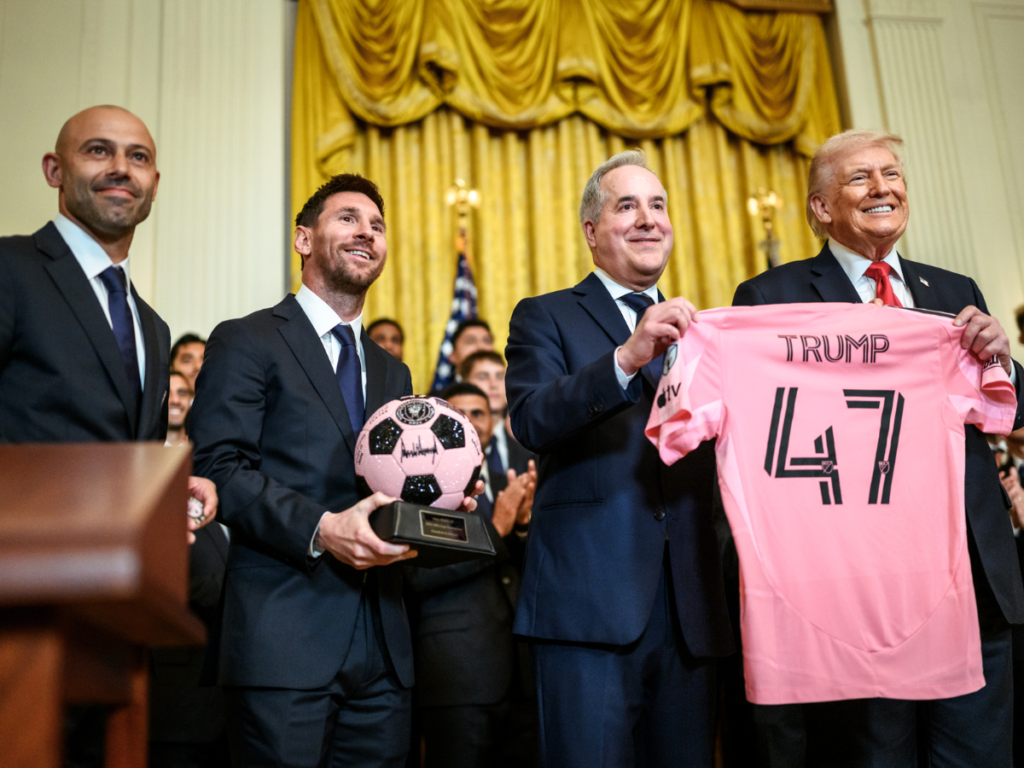
Messi
In a moment that blended sports, politics and global culture, Argentine football star Lionel Messi was welcomed at the White House by U.S. President Donald Trump during a ceremony honoring the success of Inter Miami CF. The visit, which followed the team’s recent triumph in American soccer, drew attention not only for the celebration itself but also for an unexpected conversation about one of football’s greatest legends, Pelé.
The event followed a long-standing tradition in the United States, where championship teams from major sports are invited to the presidential residence to be recognized for their achievements. On this occasion, the Inter Miami squad arrived in Washington accompanied by club officials and coaching staff. The ceremony was meant to highlight the club’s success and the growing influence of soccer in the American sports landscape.
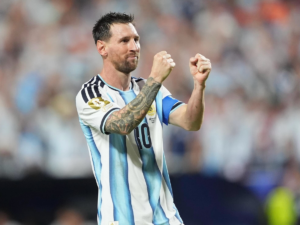
During the reception, Trump praised Messi for his remarkable impact on the sport and his decision to continue his career in the United States. The Argentine forward, widely regarded as one of the greatest players in football history, has brought renewed international attention to the American league since joining Inter Miami. His presence in the country has contributed to increased visibility, ticket demand and global media coverage surrounding the sport.
What began as a formal tribute soon shifted to a more relaxed tone. While addressing the players and guests, the president referenced the legacy of Pelé, recalling the Brazilian legend’s historic role in popularizing soccer in the United States decades ago. Trump then posed a question that has fueled debate among football fans for generations: who was the greater player—Messi or Pelé?
The remark immediately captured the attention of those present. The comparison between the two icons represents one of the most enduring discussions in football history. Pelé, the Brazilian superstar who won three FIFA World Cups, is often celebrated as the athlete who transformed football into a truly global spectacle. His time playing in the United States during the later stages of his career helped introduce the sport to a wider American audience.
Messi, meanwhile, has built a career defined by extraordinary statistics, technical brilliance and a long list of titles with club and country. Known for his precision, creativity and consistency, he has broken numerous records and established himself as a defining figure of modern football. His achievements have inspired millions of fans and players around the world.
During the ceremony, Messi maintained his typically reserved demeanor and did not directly engage in the comparison. The Argentine star has long been known for avoiding public debates about personal rankings in football history, often choosing instead to emphasize respect for past generations of players.
The visit also highlighted soccer’s expanding role in the United States. Over the past decades, the sport has steadily gained momentum, supported by investment in professional leagues, youth development programs and international talent. The arrival of globally recognized athletes such as Messi has accelerated that growth, helping the game reach new audiences across the country.
Players from Inter Miami also presented commemorative items to the president during the event, reinforcing the celebratory atmosphere. For the club, the moment represented recognition not only of their sporting achievement but also of the cultural significance soccer is beginning to hold within American society.
In the end, the gathering produced a striking image: amid discussions of national leadership and international affairs, one of the world’s most famous political venues briefly turned into a stage for football history. And once again, the timeless debate resurfaced—between the legacy of Pelé and the brilliance of Messi—reminding fans everywhere that the sport’s greatest legends continue to inspire conversation across generations and continents.