Trump Acknowledges Gaps in Advanced Weapons and Signals Enduring Military Posture
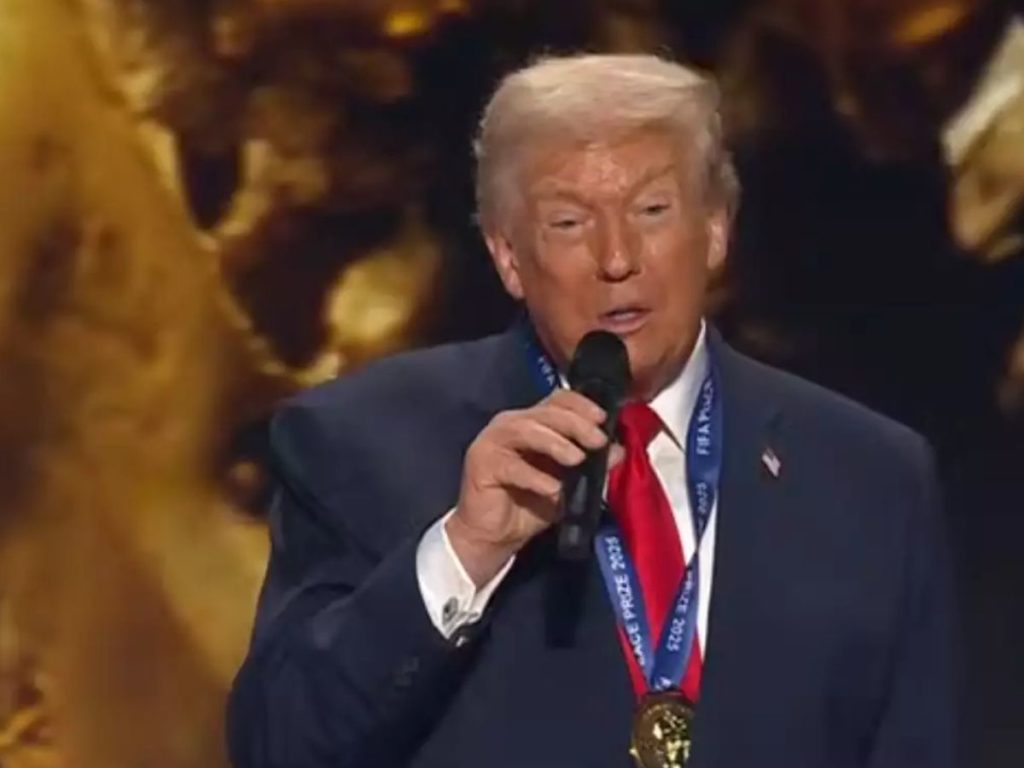
Former U.S. President Donald Trump stirred fresh debate on America’s global military strategy after publicly acknowledging limitations in certain advanced weapons capabilities while defending the need for long-term readiness in international conflicts. His remarks, delivered during a recent political appearance, reignited discussions about the United States’ position in an increasingly competitive geopolitical landscape.
In his comments, Trump suggested that the United States no longer holds an uncontested advantage in every area of cutting-edge military technology. He pointed out that rival nations have made significant progress in developing sophisticated weapon systems, signaling a shift from the longstanding narrative of unquestioned American technological supremacy in defense.
The admission drew attention because it contrasts with the traditional rhetoric often associated with U.S. military dominance. For decades, American defense strategy has been framed around unmatched strength and innovation. By recognizing that other global powers may be narrowing the technological gap—or even surpassing the United States in certain sectors—Trump introduced a tone of strategic realism, though he coupled it with calls for renewed military investment and preparedness.
Central to his remarks was the assertion that the country must be prepared for what he described as potentially enduring or “forever” conflicts if national interests are at stake. The phrase sparked controversy, as it evoked memories of prolonged military engagements that have shaped U.S. foreign policy over the past two decades. Trump framed the idea not as a desire for constant warfare, but as a necessity for permanent readiness in a world marked by instability and strategic rivalry.
Political analysts interpret the comments as part of a broader message aimed at reinforcing themes of national strength and security. In a climate where global tensions remain high and major powers compete over influence, technology, and defense capabilities, the argument for sustained military preparedness resonates with segments of the American electorate concerned about international threats.
At the same time, critics argue that emphasizing long-term military engagement risks normalizing continuous conflict and diverting resources from domestic priorities such as infrastructure, healthcare, and education. They contend that strategic competition should be balanced with diplomacy and multilateral cooperation, warning that rhetoric centered on endless readiness could further strain international relations.
Supporters, however, maintain that deterrence depends on credible strength. In their view, acknowledging weaknesses is a first step toward rebuilding capacity and ensuring that adversaries are discouraged from testing American resolve. They argue that in a rapidly evolving technological race—particularly in areas such as advanced missile systems, cyber capabilities, and artificial intelligence—constant modernization is essential to maintain global stability.
The broader context of Trump’s remarks reflects ongoing debates within the United States about defense spending, military modernization, and the country’s role on the world stage. As geopolitical competition intensifies, questions surrounding strategic priorities and long-term engagement are likely to remain central to American political discourse.
Ultimately, the discussion highlights a pivotal moment in global affairs: one in which technological parity among major powers challenges traditional assumptions about dominance, and where the balance between preparedness and diplomacy continues to shape the future of international security.