Silence Between Rockets: The Fragile Truce That Rekindles Hope in Gaza”
Gaza
After months of relentless violence, shattered homes, and painful negotiations behind closed doors, Israel and Hamas have finally signed an agreement that promises — at least for now — to halt the fighting in Gaza. The ceasefire, which also includes the exchange of Israeli hostages for Palestinian prisoners, marks the most significant diplomatic breakthrough in years of war. Yet, the path toward lasting peace remains steep and uncertain.
Between Concessions and Caution
The deal represents the first stage of a broader diplomatic plan mediated by the United States, Egypt, and Qatar. Under the terms, Israel will partially withdraw its troops from Gaza, while Hamas commits to releasing the remaining hostages held in the enclave. In return, Israel will free hundreds of Palestinian detainees — many convicted on security charges — and allow the entry of humanitarian convoys carrying food, fuel, and medicine to the besieged population.
Implementation depends on Israel’s Security Cabinet formally approving the pact and on both sides adhering to logistical and political timelines, including schedules for withdrawals and prisoner exchanges. While the agreement’s “final draft” has been approved by Israeli authorities, questions remain: did Hamas sign under the same conditions? Until all procedures are confirmed, sporadic shelling continues — a grim reminder that silence in this region often precedes another explosion.
Joy Mixed with Fear
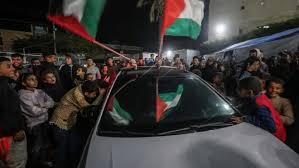
In Gaza’s streets, residents celebrated what they hope is the end of the bloodshed. In Khan Younis and Deir al-Balah, people fired shots into the air, wept, and embraced in disbelief. Across the border, families of Israeli hostages gathered in city squares, clinging to each news update with a fragile mix of relief and anxiety. Hope, though palpable, feels fragile — like a candle flickering in the wind.
Yet beneath the relief lies a cloud of uncertainty. What comes next for Gaza? Who will govern the devastated strip? And, perhaps most crucially, what will become of Hamas’s armed wing? Many of these structural questions were postponed for later stages of negotiation, leaving this initial truce as only a foundation — not a resolution.
Diplomatic Traps and Political Resistance
History shows that every ceasefire in this region carries a built-in risk of collapse. Delays or breaches could easily reignite hostilities. Israel’s long-term demand for Hamas’s disarmament — part of the broader roadmap — looms as a major obstacle. Meanwhile, much of Gaza lies in ruins: hospitals barely function, infrastructure is crippled, and clean water and electricity are scarce. Rebuilding will require not just humanitarian aid, but a rare currency in the Middle East — mutual trust.
Inside Israel, the ceasefire faces domestic turbulence. Hardline factions within the government have condemned the deal as a concession to terrorism, threatening to fracture the ruling coalition if it proceeds. The prime minister now walks a tightrope, balancing political survival with a cautious push toward stabilization.
A Pause to Breathe, Not an End to War
More than a cessation of gunfire, this truce represents a pause for breath — a fleeting moment of relief for civilians trapped in despair. If upheld, it could allow families to reunite, aid to reach the starving, and diplomacy to gain a foothold in one of the world’s most volatile conflicts.
But a temporary calm is not peace. Whether this ceasefire becomes a bridge to a new regional order or merely the prelude to another cycle of destruction remains uncertain. In Gaza, the rubble still speaks. And across the Middle East, every silence carries both hope — and tension.