Rising Tensions in the Persian Gulf as U.S. and Iran Exchange Military Strikes
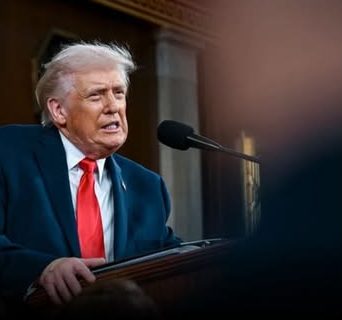
Military tensions between the United States and Iran escalated significantly after U.S. President Donald Trump announced that American forces had destroyed and sunk nine vessels belonging to the Iranian Navy during ongoing confrontations in the Persian Gulf.
According to the president, some of the targeted ships were considered large and strategically important assets. The statement was shared through his social media platform, where Trump indicated that additional military actions could follow, signaling a potential continuation of operations against Iranian naval forces.
The announcement comes amid an intensifying exchange of attacks between the two nations. The U.S. Department of Defense confirmed that three American service members were killed and five others seriously injured following an Iranian strike targeting the aircraft carrier USS Abraham Lincoln, currently deployed in the region.
The confrontation represents a sharp escalation in hostilities after joint military actions carried out by the United States and Israel against targets inside Iranian territory. Those operations reportedly resulted in the death of Iran’s Supreme Leader, Ayatollah Ali Khamenei, an event that dramatically heightened geopolitical tensions across the Middle East.
In response, Iranian military authorities claimed responsibility for attacks against two oil tankers navigating through the Strait of Hormuz, one of the world’s most critical maritime routes for global oil transportation. Control and stability in the area are considered essential to international energy supply chains and global economic security.
U.S. military officials, however, stated that the Iranian projectiles did not come close to striking American vessels, downplaying the operational impact of the attack while maintaining heightened defensive readiness.
International analysts warn that the growing confrontation raises the risk of a broader regional conflict, with potential consequences extending beyond the Middle East. Increased instability in the Persian Gulf could directly affect global oil prices, maritime trade routes, and international security dynamics.
Allied nations are closely monitoring developments as diplomatic pressure mounts for de-escalation. Meanwhile, military forces from both countries remain on high alert, fueling concerns that further retaliation could occur in the coming days.
The situation continues to evolve rapidly, marking one of the most volatile moments in U.S.–Iran relations in recent years and prompting renewed global concern over the possibility of a wider conflict.