Greenland at the Heart of Global Strategy: Trump Revives Arctic Sovereignty Debate
timepostnews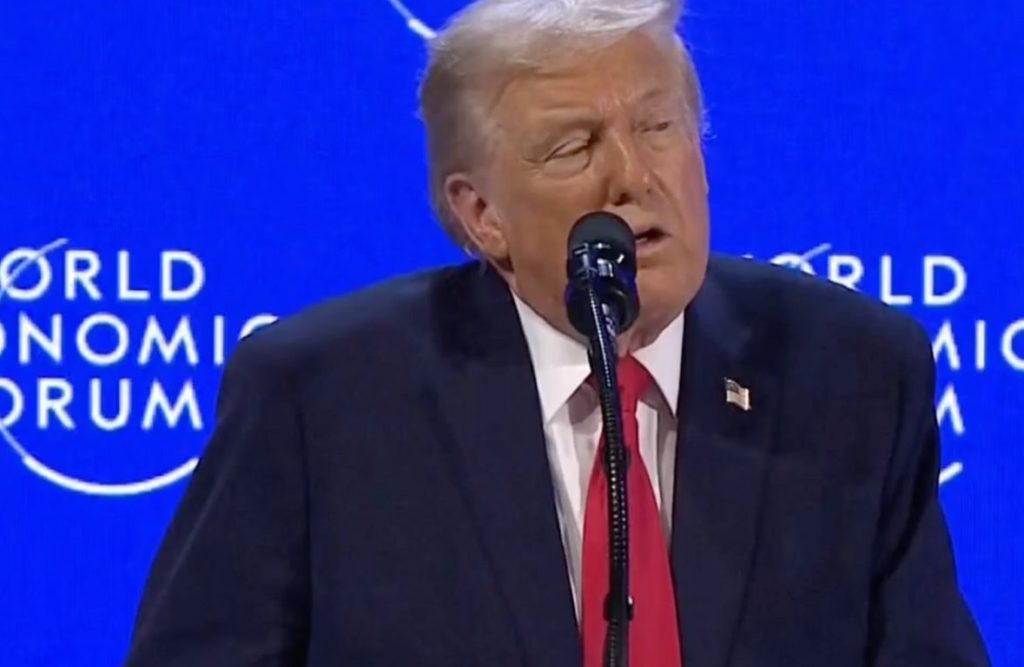
Davos
The renewed focus on Greenland by former United States president Donald Trump has once again drawn international attention to one of the most strategic regions on the planet. By reiterating his view that Greenland should come under American control, while publicly rejecting military action, Trump reignited a sensitive geopolitical discussion involving sovereignty, security, and growing global competition in the Arctic.
Greenland occupies a unique and highly strategic position in the far north, making it a crucial point for air defense systems, early warning infrastructure, and Arctic navigation routes. As climate change accelerates ice melt, the region has gained new relevance, opening potential maritime corridors and increasing interest in untapped natural resources. These factors have turned the Arctic into a central arena for global power dynamics rather than a remote frontier.
Trump’s argument centers on national and international security. According to his perspective, American influence over Greenland would strengthen strategic stability in the Arctic. Although he dismissed the possibility of military intervention, his insistence on conditions for negotiation was widely interpreted as diplomatic pressure, raising concerns among allies and regional leaders.
The response from Denmark was swift and unequivocal. Danish authorities reaffirmed that Greenland is not for sale and emphasized that its status must be determined by its people. While Greenland remains part of the Danish realm, it enjoys extensive self-government, controlling domestic affairs, economic policies, and natural resources, with Denmark retaining responsibility primarily for defense and foreign relations.
Greenlandic leaders echoed this position, stressing the principle of self-determination. Local officials rejected any notion of being treated as a bargaining chip between global powers and reinforced the importance of political autonomy, cultural identity, and democratic decision-making. For Greenland’s population, the debate goes beyond geopolitics and touches directly on dignity, sovereignty, and the right to define their own future.
The controversy also reverberated across the international community. Allied nations expressed unease with the rhetoric, underscoring that territorial matters should be addressed through diplomacy and respect for international law. Within the framework of the NATO, the prevailing stance has been one of solidarity with Denmark and a commitment to maintaining stability and trust among partners.
Political analysts note that the renewed debate highlights a broader shift in global priorities. The Arctic has emerged as a focal point for military planning, economic interests, and environmental concerns. As major powers seek to expand their influence in the region, even symbolic statements can generate significant diplomatic repercussions.
While there is no immediate indication of military escalation, the discussion surrounding Greenland underscores the fragility of geopolitical balances in an era marked by strategic competition. It also illustrates how political discourse can amplify tensions, even among longstanding allies, when sensitive issues such as territorial sovereignty are brought to the forefront.
At its core, the Greenland debate is not solely about strategic advantage. It reflects deeper questions about respect for autonomy, the limits of power politics, and the importance of dialogue in resolving international disputes. Once again, Greenland stands at the crossroads of global interests, embodying the challenges of a world where geography, power, and diplomacy are increasingly intertwined.