Attack on Khamenei’s Son Reshapes Iran’s Internal Power Dynamics
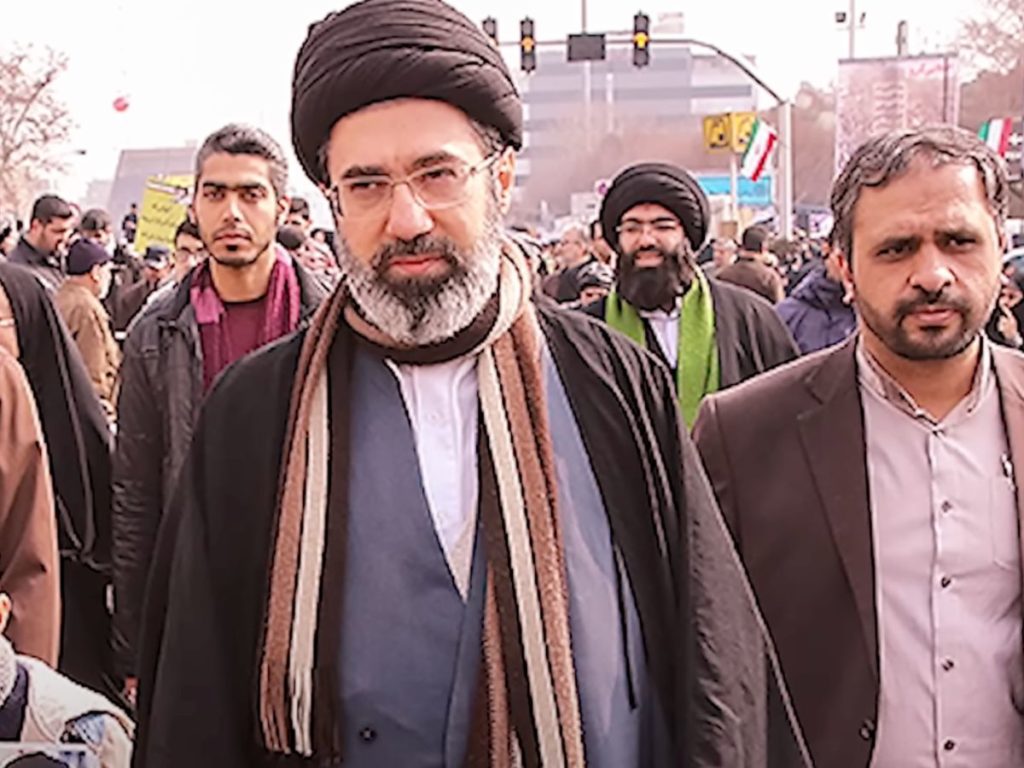
Mojtaba Khamenei
An alleged U.S. strike targeting a vehicle carrying the son of Iran’s Supreme Leader has intensified regional tensions and unexpectedly elevated the political profile of a figure long viewed as operating behind the scenes of Tehran’s power structure.
A high-level security incident involving Mojtaba Khamenei, son of Supreme Leader Ayatollah Ali Khamenei, has sent shockwaves through Iran’s political establishment and added a new layer of complexity to already strained relations between Tehran and Washington. According to Iranian officials, Mojtaba survived an attack reportedly carried out by U.S. forces, in what appears to have been a calculated move aimed at destabilizing the upper tiers of Iran’s leadership.
While details surrounding the strike remain limited, the political consequences are becoming increasingly visible. Mojtaba Khamenei, who has long been considered an influential but discreet presence within Iran’s inner circle, now finds himself at the center of national and international attention.
Inside Iran, the incident has triggered a wave of official condemnation and public messaging focused on resilience and unity. Government statements emphasized that external aggression will not fracture the country’s leadership structure. Instead, officials framed the failed attempt as evidence of the nation’s endurance under pressure.
Beyond rhetoric, the event may carry significant implications for Iran’s succession politics. Although Iran is not a hereditary system, informal networks of influence play a decisive role in leadership transitions. Mojtaba Khamenei has often been mentioned by political observers as a potential successor to his father, given his close ties to key religious authorities and segments of the Revolutionary Guard.
The attack — and his survival — may accelerate that trajectory. In political systems shaped by ideology, loyalty, and symbolic narratives, surviving an assassination attempt can transform an individual into a figure of strength and legitimacy. Within certain factions, the event is already being interpreted as a sign of endurance in the face of foreign hostility.
At the same time, the incident heightens the risk of escalation between the United States and Iran. Direct actions involving members of the Supreme Leader’s family mark a significant threshold. Even if intended as a tactical operation, the symbolic weight of targeting someone so closely linked to the core of Iranian authority cannot be understated.
Security analysts warn that retaliatory actions—whether overt or through regional proxies—remain a possibility. Iran has historically responded to external military pressure with asymmetric strategies, often extending confrontations beyond immediate geographic boundaries.
Internationally, the development complicates diplomatic efforts aimed at managing tensions in the Middle East. Any shift in Iran’s internal power balance can influence decisions related to nuclear negotiations, regional alliances, and military posture.
For now, Mojtaba Khamenei’s condition is reported as stable, and he has not made public statements. However, his rising visibility marks a turning point. A figure once operating largely in the background may now assume a more prominent role, whether by necessity or political design.
The broader question remains whether this episode will serve as a catalyst for consolidation within Iran’s leadership or deepen fault lines beneath the surface. In a region already navigating volatility, the survival of the Supreme Leader’s son has become more than a security story—it is a moment that could reshape the internal and external trajectory of the Islamic Republic.
As tensions simmer, one reality is clear: what began as a targeted strike has evolved into a pivotal chapter in Iran’s evolving political landscape.