A Controversial Tribute: Machado’s Nobel Dedication to Trump and a Nation in Pain
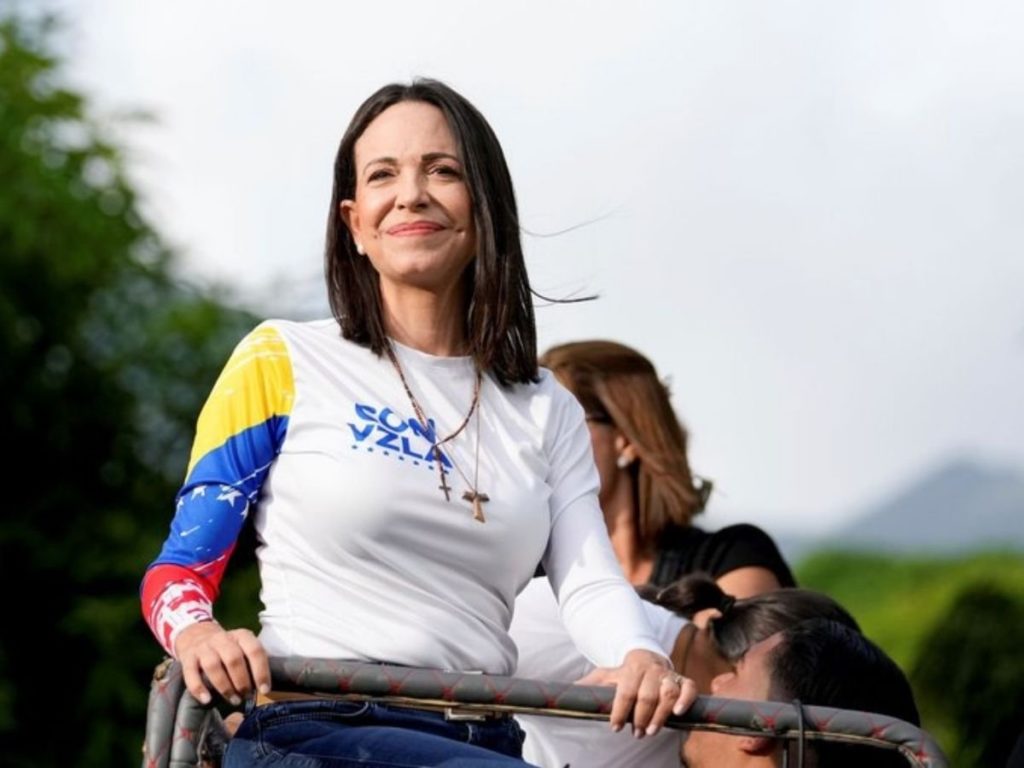
María Corina
When Venezuela’s opposition leader accepted the world’s most prestigious peace award, she stunned the audience by dedicating it not only to her people but also to former U.S. President Donald Trump. More than a personal gesture, her words reverberated as a political statement — one that intertwines gratitude, strategy, and controversy in equal measure.
A collective victory with a calculated message
For Maria Corina Machado, the recognition symbolized the resilience of a nation battered by hunger, censorship, and economic collapse. She described the award as belonging to “a suffering people” who never stopped believing in freedom. Yet her unexpected dedication to Donald Trump shifted the tone from national gratitude to geopolitical symbolism.
To some, it was an act of appreciation for a world leader who had, in her view, supported the Venezuelan opposition during its darkest days. To others, it politicized a humanitarian honor that is meant to transcend ideological borders. The Nobel Peace Prize, often seen as a moral compass, suddenly became a mirror reflecting the polarized realities of international politics.
Context behind the words
Venezuela remains trapped in an enduring crisis — a democracy hollowed out by authoritarian rule, with institutions weakened, dissent repressed, and millions forced into exile. In this landscape, Machado has emerged as one of the most vocal symbols of defiance. By dedicating her award to the Venezuelan people, she reaffirmed that her fight is rooted in the daily struggles of citizens facing poverty and hopelessness.
But invoking Trump’s name introduced another dimension: foreign influence. The former U.S. president has long been a divisive figure in Latin America, praised by some for his hard stance against Nicolás Maduro’s regime and criticized by others for his polarizing diplomacy. Machado’s acknowledgment, therefore, was not just personal — it was a deliberate signal that her movement aligns itself with forces beyond Venezuela’s borders.
Risks and opportunities
Such a gesture carries both promise and peril. On one hand, it may strengthen her ties with international allies who favor a tougher stance on autocratic governments. On the other, it risks alienating moderate supporters and fueling the regime’s narrative that the opposition is controlled by foreign powers.
Political observers note that peace prizes often become turning points — symbols used to amplify a message. In Machado’s case, that message could either rally a global coalition around Venezuela’s democratic cause or fracture support among those wary of partisan associations.
Beyond the applause
The true impact of her words will unfold after the ceremony. If harnessed strategically, the Nobel can serve as a platform for renewed diplomatic pressure, mobilization of civil society, and restoration of moral legitimacy to Venezuela’s opposition. But if her dedication becomes a distraction, it could reduce her historic recognition to another chapter of political controversy.
Ultimately, Machado’s statement underscores a broader truth: in Venezuela, no victory is purely symbolic, and no award is free from political weight. Her gesture stitched together admiration and provocation, gratitude and calculation. It turned a moment of peace into a fresh battlefield — where ideals of freedom collide with the realities of global politics.
In the end, her words spoke to two audiences: one yearning for liberation, the other watching how far political gratitude can go before it becomes a new form of power.