Historic Meeting in China Brings Trump, Xi Jinping and Putin Together Amid Global Tensions
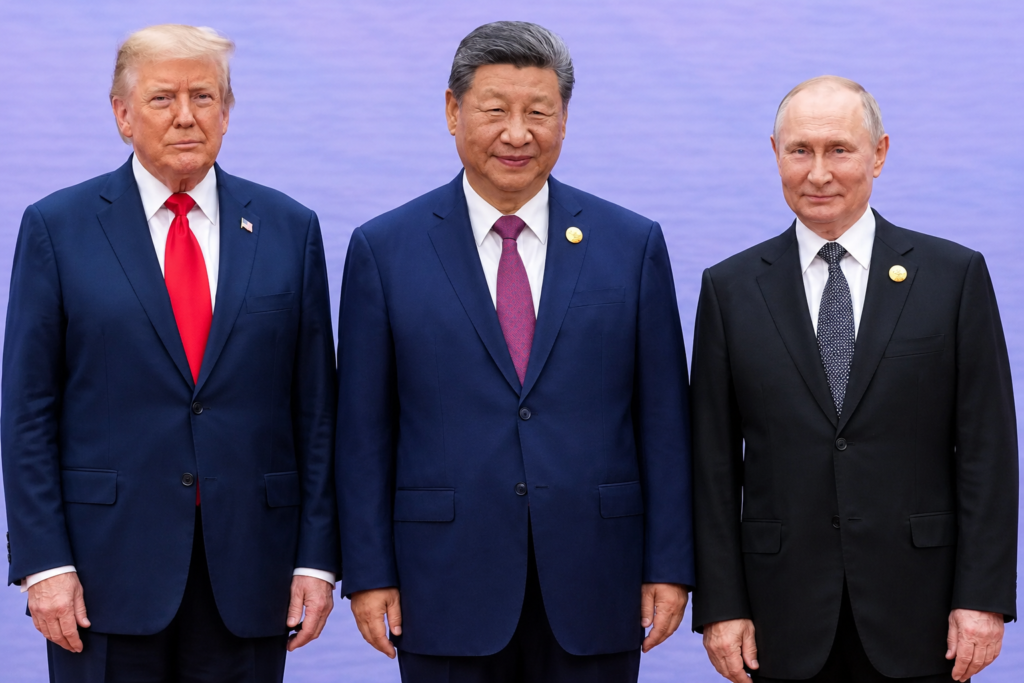
Leaders of the United States, China and Russia display diplomatic goodwill ahead of unprecedented trilateral talks that could address the war in Ukraine, international trade, nuclear security and the future of global relations.
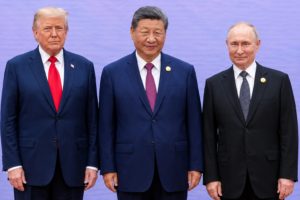
The presidents of the United States, Donald Trump, China, Xi Jinping, and Russia, Vladimir Putin, displayed gestures of cordiality during an international leaders’ gathering in Shenzhen, southern China. Smiles, greetings and handshakes marked the official reception ahead of a trilateral meeting considered historic because of the political, economic and military influence of the three countries.
The diplomatic rapprochement comes at a time of significant disagreements between Washington, Beijing and Moscow. Despite the friendly public exchanges, the three governments continue to hold conflicting positions on major strategic issues, including the war in Ukraine, nuclear arms control, international trade disputes and the development of advanced technologies.
The gathering is part of the Asia-Pacific Economic Cooperation (APEC) agenda, which brings together representatives of major economies to discuss trade, investment and regional cooperation.
Diplomatic Reception Signals an Attempt at Rapprochement
Donald Trump’s arrival in China was marked by a personal welcome from Xi Jinping at Shenzhen Airport. The Chinese president greeted his American counterpart with an embrace, an unusual gesture in China’s traditionally formal diplomatic protocol.
The welcoming ceremony featured a red carpet, official performances and participants carrying flags and flowers. The reception was interpreted as a demonstration of the importance Beijing places on its bilateral relationship with Washington.
Before Trump’s arrival, Xi Jinping had also met with Vladimir Putin, highlighting the close political relationship developed between China and Russia in recent years.
The Chinese government seeks to maintain its strategic partnership with Moscow while protecting its extensive economic interests with the United States, one of the world’s leading trading powers.
This diplomatic balancing act reflects China’s broader ambition to strengthen its international influence while avoiding further confrontation with Washington.
Ukraine War and Technology Disputes Remain Major Challenges
The trilateral meeting is expected to bring together leaders whose decisions have a decisive impact on major international conflicts and economic disputes.
The war in Ukraine remains one of the most sensitive issues. Russia continues to face sanctions imposed by Western countries, while the United States plays a central role in negotiations and decisions affecting European security.
Another major concern involves American restrictions on the supply of advanced semiconductors to China, particularly components used in the development of artificial intelligence systems.
Technological competition has become one of the central elements of the economic rivalry between Washington and Beijing, affecting multinational corporations, global supply chains and international investment.
Nuclear security is also expected to feature prominently in discussions, given the military capabilities of the United States and Russia and China’s growing strategic importance.
The outcome of these conversations could influence international security policies and the future of diplomatic cooperation among the world’s most powerful nations.
Diplomacy Seeks Concrete Results
In addition to the joint meeting, Trump is expected to hold bilateral discussions with Xi Jinping. Both presidents have sought to establish diplomatic channels capable of reducing commercial tensions and improving predictability in relations between the world’s two largest economies.
The American president’s Asian tour also included engagements in the Philippines and contacts with other international leaders, including Canadian Prime Minister Mark Carney, to discuss trade-related matters.
Although the gestures of rapprochement represent an important diplomatic signal, there are still no guarantees that the discussions will produce concrete agreements.
The central challenge will be transforming the cordiality displayed before the cameras into meaningful progress on the issues dividing the three powers.
Any breakthrough could have consequences extending far beyond Washington, Beijing and Moscow, potentially influencing international markets, military alliances, global security and the broader geopolitical balance.
At a time when economic competition and geopolitical uncertainty continue to shape international relations, the meeting highlights the importance of direct dialogue among global powers.
Whether the diplomatic engagement leads to lasting cooperation or remains largely symbolic will depend on the willingness of the three governments to move beyond public gestures and address their fundamental differences.