
FIFA President Responds After Trump Reveals Call Over World Cup Red Card Decision
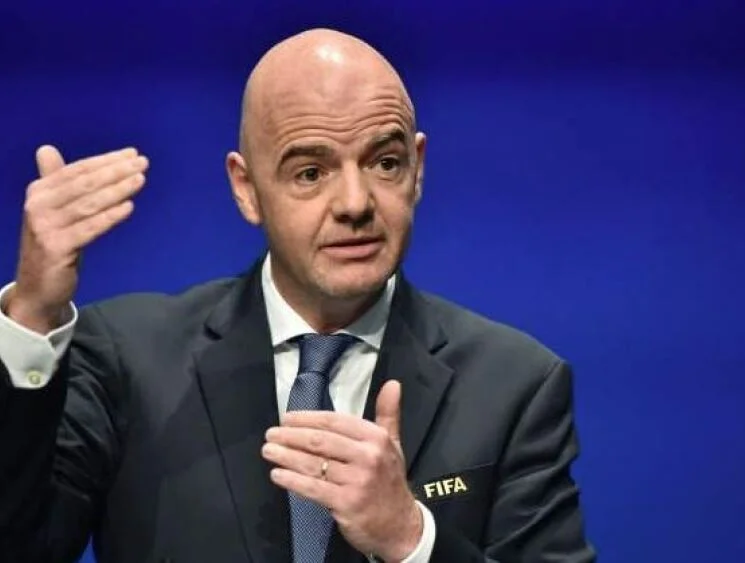
The FIFA World Cup has been thrust into controversy after U.S. President Donald Trump publicly acknowledged contacting FIFA President Gianni Infantino regarding the red card shown to United States forward Folarin Balogun. The revelation sparked widespread debate about the independence of football’s governing bodies and the integrity of disciplinary decisions during the world’s biggest sporting event.
The incident began after Balogun was sent off during a crucial World Cup match, leaving him suspended for the United States’ next fixture. However, the suspension was later overturned following a disciplinary review, allowing the striker to return to the squad. The reversal immediately generated discussion among football fans, analysts, and officials, with many questioning how the decision had been reached.
Speaking publicly, Trump confirmed that he had personally called Infantino to express his belief that the dismissal had been unfair. According to the U.S. president, the conversation was intended only to highlight what he considered an incorrect refereeing decision rather than to influence the disciplinary process. He emphasized that FIFA’s independent committees remained responsible for making the final ruling.
Following the public attention surrounding Trump’s remarks, Gianni Infantino addressed the situation to clarify FIFA’s position. He explained that, as president of the organization, he regularly communicates with world leaders, government officials, and representatives from host nations on a wide range of matters related to international football and major tournaments.
Infantino acknowledged receiving the phone call but stressed that FIFA’s judicial and disciplinary bodies operate independently from the organization’s executive leadership. According to him, decisions regarding player suspensions and disciplinary appeals are handled exclusively by specialized committees that follow the governing body’s regulations without interference from FIFA’s president or external political figures.
The FIFA chief reiterated that maintaining the independence of its disciplinary system is essential to protecting the credibility of international competitions. He emphasized that every case is evaluated according to established procedures, ensuring fairness and consistency regardless of the teams or individuals involved.
Despite those assurances, the episode has fueled global discussion about the relationship between politics and international sport. The fact that a sitting head of state publicly admitted contacting FIFA over a disciplinary matter has raised questions about public perception, even if no formal influence on the decision-making process occurred.
Sports governance experts note that transparency and institutional independence are fundamental to preserving trust in global competitions such as the FIFA World Cup. Any appearance of outside influence—even when denied by officials—can generate skepticism among supporters and participating nations.
As the tournament continues, FIFA is seeking to reinforce confidence in its disciplinary framework while keeping the focus on the competition itself. Nevertheless, the controversy has become one of the World Cup’s most talked-about off-field stories, highlighting how political figures and major sporting events can intersect in ways that attract worldwide attention.
While attention now shifts back to the action on the pitch, the debate surrounding the incident serves as another reminder that modern football extends far beyond the game itself. Issues involving governance, transparency, and institutional independence remain just as important as the performances taking place on the field.