
Trump Says Cuban Regime Is Near Collapse and Rules Out Immediate Military Action
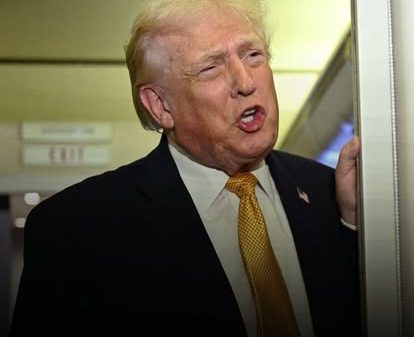
Donald Trump
U.S. President Donald Trump stated that the regime in Cuba is approaching an internal collapse, driven by a deepening economic and social crisis on the island. According to Trump, the current conditions indicate that the Cuban system is reaching its structural limits and may no longer be able to sustain itself.
Speaking about the situation, the American president adopted a markedly different tone from that used in recent episodes involving other countries in the region. Trump emphasized that he does not see the need for a direct military intervention in Cuba at this stage, arguing that the regime is already weakening under its own weight. In his assessment, internal pressures are likely to accelerate political and institutional erosion without the need for external force.
Trump pointed to worsening living conditions for the Cuban population as a central factor in this process. Shortages of basic goods, declining purchasing power and growing social dissatisfaction were highlighted as signs of a system under severe strain. The U.S. administration believes that long-standing economic difficulties, combined with international pressure, are contributing to a scenario of progressive exhaustion for the Cuban government.
Despite ruling out immediate military action, Trump made it clear that Washington will continue to closely monitor developments on the island. The United States is expected to maintain its policy of economic pressure and diplomatic scrutiny, relying on sanctions and other non-military tools to influence the situation. According to the president, this approach allows internal dynamics to play a decisive role while avoiding further military escalation in the Caribbean.
The remarks come amid lingering humanitarian concerns linked to previous U.S. military actions in the region. Cuban authorities have reported that at least 32 Cuban citizens were killed during earlier American offensives, a figure frequently cited as evidence of the human cost of armed confrontations. These losses continue to weigh on the broader debate over foreign intervention and regional stability.
Within the United States, Trump’s comments have been interpreted as a signal of strategic caution. While maintaining a firm stance against the Cuban regime, the administration appears intent on balancing political pressure with efforts to prevent new outbreaks of military conflict. Observers note that the rhetoric reflects an attempt to project strength while avoiding actions that could trigger wider instability.
Internationally, the situation in Cuba remains under close observation. Governments and organizations around the world are watching for signs of further deterioration or potential political change, aware that a collapse of the current regime could significantly reshape the geopolitical landscape of the region and redefine relations between Havana and Washington.