Trump Receives FIFA’s First Peace Award Amid Controversy at World Cup Draw
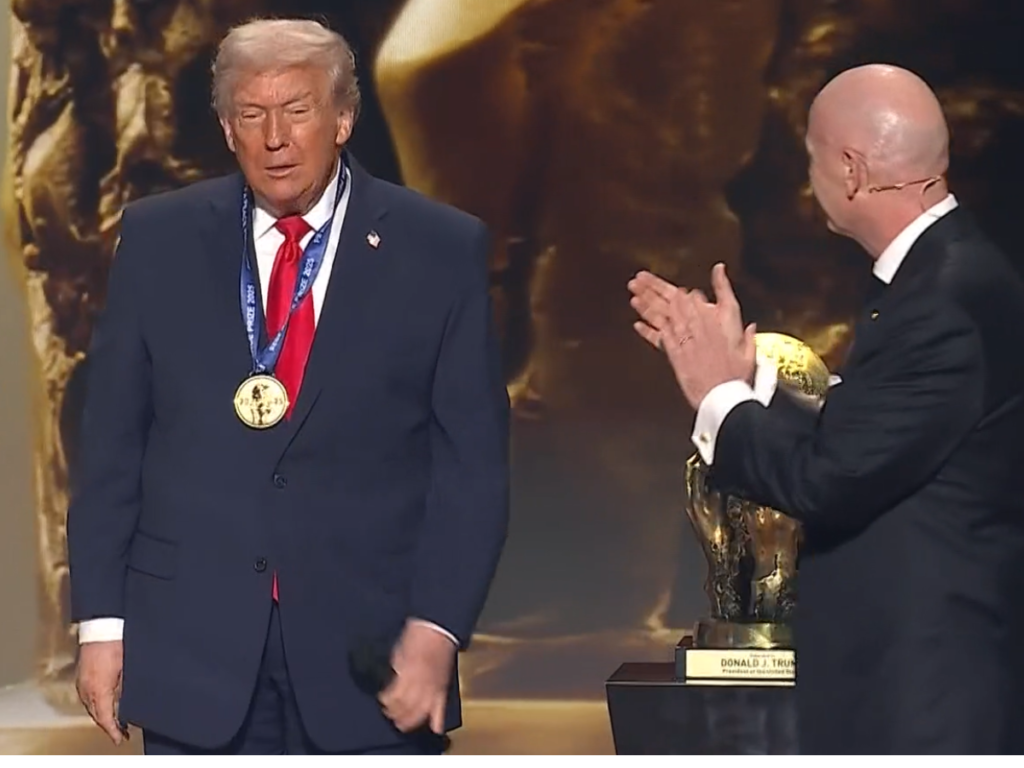
Trump
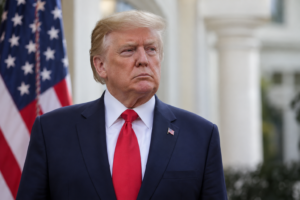
n one of the most unexpected and controversial moments of the 2026 World Cup draw, U.S. President Donald Trump was honored with FIFA’s inaugural Peace Award, a new recognition created by the global governing body of football. The presentation took place during a high-profile ceremony in Washington, attended by officials, diplomats and invited guests, and quickly ignited reactions that blended sporting prestige with political tension.
FIFA introduced the award as a tribute to individuals who, in the organization’s view, have carried out “exceptional and extraordinary actions in favor of peace and global unity.” FIFA President Gianni Infantino presented Trump with both the trophy and the commemorative medal on the main stage, emphasizing the American leader’s alleged efforts to promote dialogue in international conflicts and to support the idea of sports as a universal bridge between nations.
In his acceptance speech, Trump described the honor as “one of the greatest” of his life, asserting that his initiatives had contributed to reducing tensions in several regions around the world. He referenced moments in which, according to him, he mediated crises or prevented escalations of violence, citing places such as the Congo and pointing to disputes between India and Pakistan as examples of situations in which he believed he played a role in easing conflict.
The presentation came during the draw that determined the group stage of the expanded 48-team tournament, which the United States, Mexico and Canada will jointly host. The decision to select Trump as the first-ever recipient surprised many attendees and immediately sparked debate among analysts in sports, international relations and diplomacy.
The creation of the Peace Award, announced prior to the ceremony, had been interpreted by some observers as a symbolic move by FIFA to strengthen its image on the global stage and to align football with humanitarian values. Yet the choice of Trump—a deeply polarizing figure worldwide—raised questions about the intersection of politics and sports, and about the criteria used to define who deserves recognition for advancing “peace.”
The ceremony brought together influential sports leaders and high-profile guests. Beyond the award itself, the event highlighted preparations for the upcoming World Cup, with expectations of record attendance and global viewership. Trump used part of his speech to praise FIFA’s leadership and to reiterate his belief in football’s ability to serve as a cultural and social unifier, especially in a tournament of unprecedented scale.
Critics of the award expressed doubts over its legitimacy and pointed to the lack of an established tradition surrounding the new honor. Some questioned whether the proximity between FIFA officials and political figures could compromise the neutrality expected of international sporting institutions. Others argued that awarding a political leader as the inaugural honoree could set a contentious precedent for future editions.
Despite divided opinions, the moment has already secured its place as one of the most talked-about intersections of football and global politics. It underscored, once again, how major sporting events often reflect broader international debates—amplifying conversations that extend far beyond the boundaries of the pitch.