
U.S. Seizure of Tanker Near Venezuela Escalates Regional Tensions
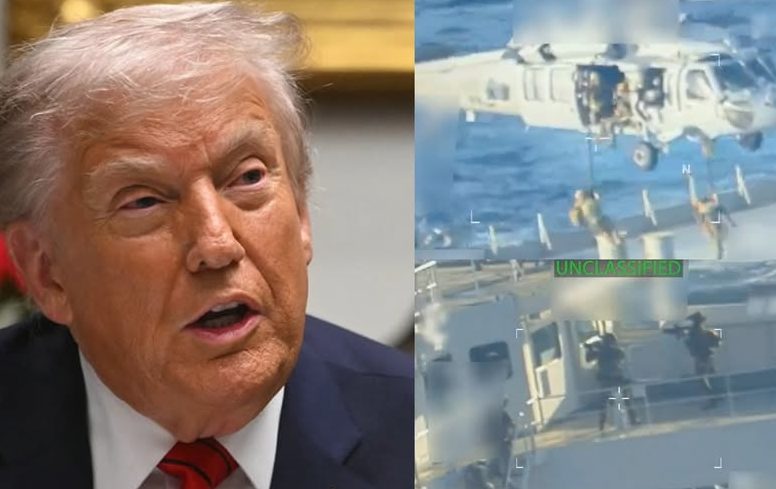
The United States has seized an oil tanker operating near the coast of Venezuela, intensifying a long-standing dispute between Washington and Caracas over sanctions, maritime control and the flow of Venezuelan crude. The operation, carried out in international waters, has sparked a new wave of diplomatic friction and revived debates over the reach and legitimacy of unilateral sanctions.
According to U.S. authorities, the vessel was transporting Venezuelan oil in violation of economic restrictions designed to limit the revenue stream of the Venezuelan government. Officials argue that the shipment was part of a broader network of illicit exports operating outside the parameters established by American sanctions, which target key sectors of the South American nation’s economy.
The tanker, flying a foreign flag, was intercepted and escorted to a U.S.-controlled port for inspection. Its crew and cargo remain held pending legal and administrative procedures. American officials have described the operation as a necessary measure to ensure compliance with sanctions and prevent what they characterize as attempts by the Venezuelan state to circumvent restrictions through offshore intermediaries.
The Venezuelan government strongly condemned the seizure, calling it an act of “maritime piracy” and an assault on national sovereignty. Caracas maintains that the vessel was operating within an area it considers part of its jurisdiction and insists the operation represents yet another episode in a series of hostile actions by Washington. Venezuelan authorities have summoned diplomatic representatives and requested international attention for what they view as a violation of the principles of non-intervention.
International law scholars note that the case highlights recurring controversies over maritime enforcement of unilateral sanctions. While the United States argues that such actions are justified to uphold its foreign policy and security objectives, critics contend that operations in international waters blur the line between lawful enforcement and extraterritorial overreach. The incident is expected to reignite discussions about the limits of maritime authority and the pressures placed on global shipping companies navigating politically sensitive routes.
For the already fragile relationship between the two countries, the tanker seizure adds a new layer of complexity. Washington has long maintained that economic restrictions are aimed at holding Venezuela’s leadership accountable for political repression and economic mismanagement. Caracas, por sua vez, argues that sanctions have deepened the country’s economic crisis and hindered its access to global markets.
Energy analysts warn that such incidents may contribute to greater volatility in regional oil shipments, particularly as traders and carriers reassess the risks of operating near Venezuelan waters or transporting crude linked to the country. The uncertainty could also affect supply chains in parts of the Caribbean and Latin America, where refineries and distributors depend on predictable shipping routes.
As both governments exchange increasingly sharp public statements, the status of the vessel and its cargo remains unresolved. The dispute is expected to continue unfolding through diplomatic channels and, potentially, in U.S. courts. Observers say the outcome could influence not only the bilateral relationship but also the broader global debate about the use of sanctions as a tool of foreign policy.
In a region where political tensions and resource disputes frequently intersect, the seizure of a single tanker has once again underscored how energy, sovereignty and geopolitics remain tightly bound in the Americas.