
From Goiás to Mozambique: Poetic Collective Embarks on Ancestral Journey Connecting Brazil and Africa
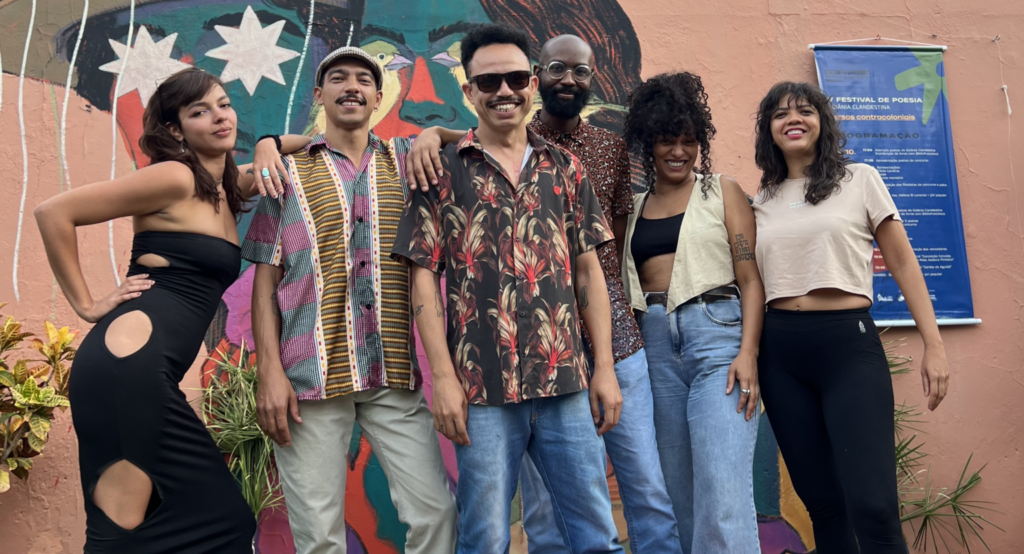
Goiânia Clandestina
The poetic collective and independent publishing label Goiânia Clandestina will travel to Mozambique from November 15 to December 5, taking the power of Goian poetry and peripheral literature to the African continent. Supported by the public program Goiás Mundo Afora, the trip represents not only an artistic exchange but also a symbolic reunion with the historical and ancestral roots that unite Brazil and Africa.
Formed by six members — Mazinho Souza, Flávia Carolina, Helena Di Lorenza, Thaíse Monteiro, Rafael Vaz, and Baale — the collective will present performances and educational activities on topics such as national poetry, cordel literature, and original poetic works. The project reinforces the group’s mission to decentralize artistic production and highlight narratives that emerge from the margins.
“Taking Goiânia Clandestina to Mozambique is more than a journey — it’s a symbolic return to the home of our ancestors. It’s a way of affirming that colonialism did not win. We stand tall, reclaiming what was silenced and strengthening the ancestral bond that has never been broken,” says Mazinho Souza, founder of the collective.
From the Goian Periphery to the World: Art as Reexistence
The group’s participation in Mozambique aligns with the African principle of Sankofa, which means “to look back in order to understand the present and build the future.” For Goiânia Clandestina, this journey is an act of listening, healing, and continuity.
“Our role is to amplify and give visibility to silenced voices. This project is, above all, an act of listening and reexistence. Art, for us, is a tool of discovery and dignity,” explains Mazinho.
During their stay in Mozambique, the collective will perform poetry readings and lead discussion circles addressing themes such as race, class, and gender through spoken word and performance. The international experience is seen as a moment of living exchange — an opportunity to bring Goian poetry abroad and return with renewed perspectives on the artistic and political dimensions of Black and peripheral literature.
The Journey of Goiânia Clandestina
Founded in 2016, Goiânia Clandestina was born from the need to give voice to writers historically excluded from mainstream publishing. Since its creation, the collective has worked as a space for artistic formation, independent production, and cultural dissemination, especially within the peripheries of Goiânia and Aparecida de Goiânia.
The group’s first public activity was a creative writing and Black poetry workshop led by Mazinho Souza at Teatro Cidade Livre. In 2017, they released the Antologia Clandestina, featuring 22 emerging poets from Goiás, during a major event at Centro Cultural Goiânia Ouro that included musical performances and an independent publishing fair.
That same year, they organized the first Goiânia Clandestina Poetry Festival, supported by the Municipal Culture Law, which occupied several cultural venues in the city and its metropolitan area. The Antologia Clandestina II, released in 2021, gathered over 40 Goian authors in an online celebration.
Also in 2021, the group launched the Revista Cultural Clandestina, a digital magazine discussing art, culture, and ancestry through a decolonial and peripheral lens. Around the same time, they created the Escola de Escritores (Writers’ School), a continuous training initiative for poets, slammers, and lyricists, which resulted in several published works by participants.
More recently, Goiânia Clandestina has expanded its activities with cultural symposia, artistic gatherings, and educational programs — such as the Afrodiasporic Epistemologies Symposium (2024) — reaffirming its commitment to art as a tool for resistance and social transformation.
Service:
Period: November 15 – December 5, 2025
Location: Mozambique
Themes: National Poetry, Cordel Literature, and Original Works
Organized by: Government of Goiás – Goiás Mundo Afora Program
Instagram: @goianiaclandestina
By Fernanda Garcia