
“Total Trade Shock”: Trump’s 100% Tariff on China Reignites Global Economic Tensions
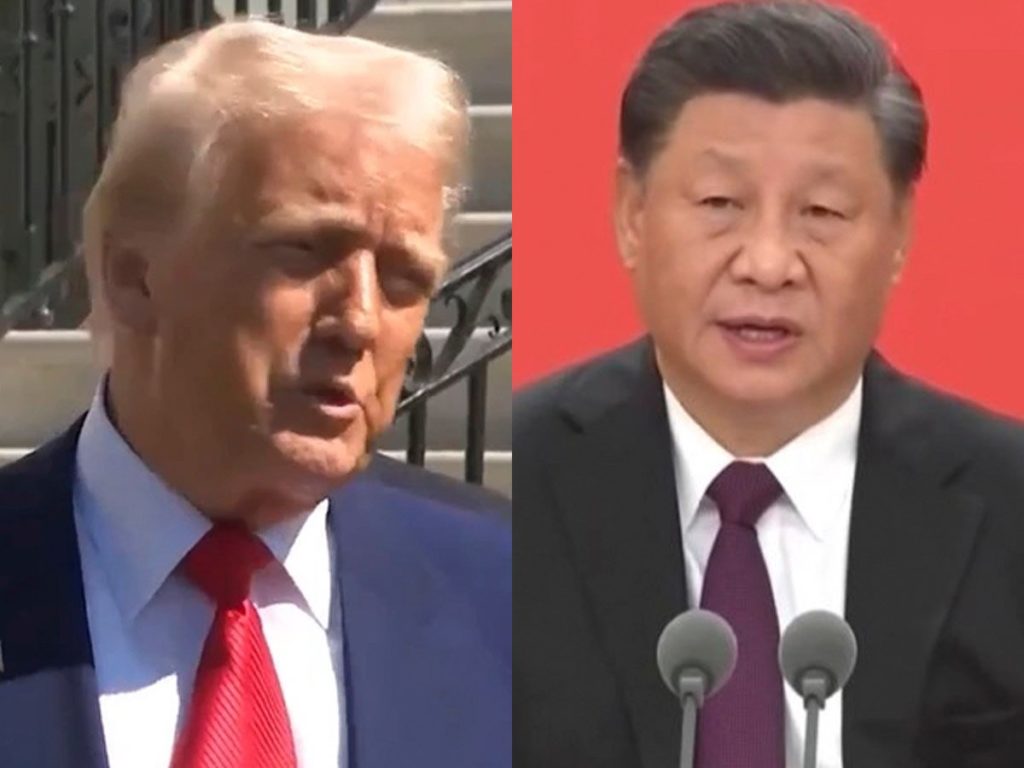
The announcement of a 100% tariff on Chinese imports by former U.S. President Donald Trump has sent shockwaves through global markets, reigniting fears of a renewed trade war between the world’s two largest economies. What began as a strategic move to “protect American industry” now threatens to reshape the balance of global commerce — and not necessarily in Washington’s favor.
At the heart of the decision lies a growing rivalry that extends far beyond trade deficits. The U.S. accuses China of imposing restrictive controls on key raw materials — particularly rare earth minerals — vital to the production of semiconductors, electric vehicles, and advanced technologies. In response, Trump’s team framed the 100% tariff as both a punishment and a negotiation tactic, aiming to pressure Beijing into reversing such export restrictions.
The measure, however, carries immediate consequences. Global markets have reacted with volatility as investors brace for retaliation from China, while multinational corporations scramble to reassess supply chains already stretched by years of economic tension. Electronics, automotive, and high-tech sectors are among the most exposed — heavily reliant on components and materials sourced from Asia.
Behind the rhetoric of “America first” lies a clear strategic ambition: to reestablish U.S. dominance in manufacturing and technological production, reducing dependence on Chinese imports. Yet, this approach risks triggering a new wave of retaliatory measures that could destabilize trade routes and increase inflationary pressure worldwide.
Beijing’s initial reaction has been defiant. Officials have condemned the tariff as “economic coercion,” signaling that reciprocal measures could follow. China’s possible counterattacks include new export restrictions, tariffs on U.S. agricultural goods, and diplomatic maneuvers aimed at isolating Washington in multilateral trade forums. Both nations, deeply interdependent despite their rivalry, now find themselves locked in a high-stakes standoff where every move could backfire.
The impact of this escalation extends beyond Washington and Beijing. Emerging economies — many of which depend on exports of commodities or intermediate goods to both powers — could suffer collateral damage. Supply chain disruptions, price fluctuations, and slower investment flows are likely to ripple through regions like Latin America, Africa, and Southeast Asia.
Economists warn that the global trading system, already weakened by previous tariff battles and the pandemic’s lingering effects, might not withstand another round of economic nationalism at this scale. The introduction of such an extreme tariff reopens old wounds from the last trade war, with businesses once again caught between unpredictable political agendas and the practical realities of global interdependence.
For Trump, the move plays well with his base — symbolizing strength and a promise to “bring back American jobs.” But in the broader context of international relations, it marks a return to an era of confrontation where economic policy doubles as geopolitical strategy.
If the tariff becomes permanent, it could redefine how nations approach global trade — prioritizing control and security over cooperation and efficiency. What’s at stake is not just the flow of goods, but the structure of global power itself.