
Cardi B vs. Nicki Minaj: Hypocrisy Claims and Beyoncé’s Name Fuel New Chapter in Rap Rivalry
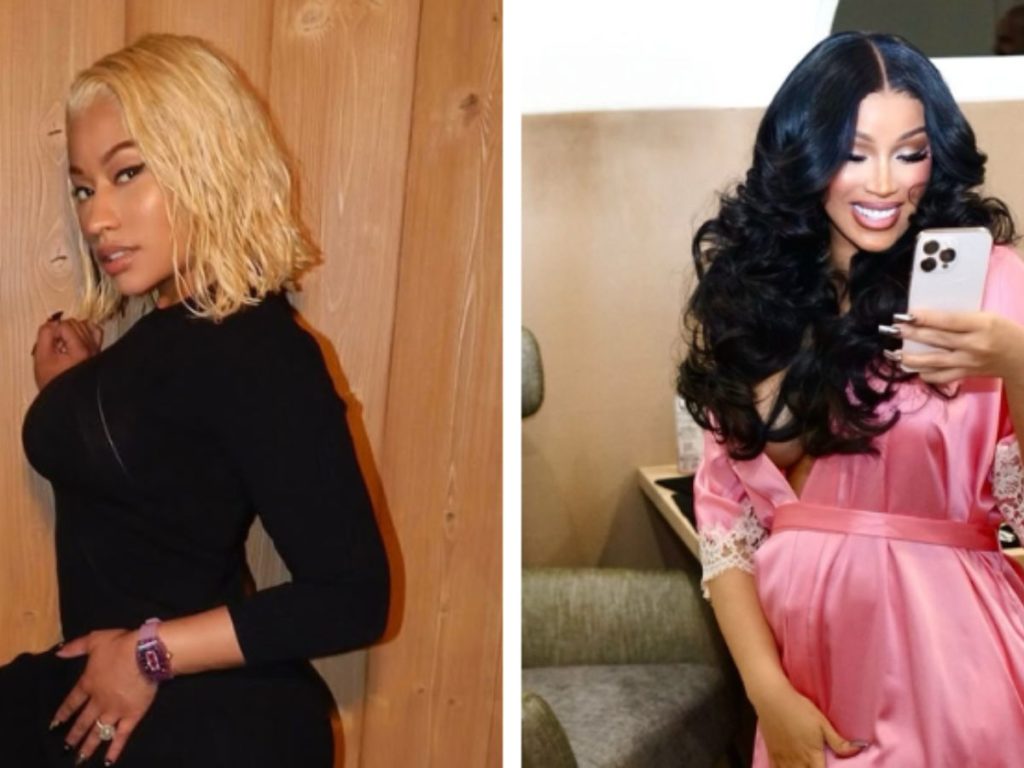
The long-standing tension between Cardi B and Nicki Minaj has erupted once again, this time with accusations, personal jabs, and even Beyoncé’s name being drawn into the fire. What began as comments on album performance quickly spiraled into a public feud that extends far beyond music charts.
The latest spark came after the release of Cardi B’s album Am I the Drama?, which climbed high on streaming platforms and sales rankings. Nicki Minaj downplayed the achievement, mocking promotional strategies and suggesting that Cardi had inflated her numbers. Cardi, never one to remain silent, struck back by emphasizing that comparisons should be made among artists in the same era, dismissing Minaj’s remarks as irrelevant.
But what could have remained a clash over sales and recognition soon turned personal. Minaj aimed direct insults at Cardi B’s daughter, Kulture, using harsh terms that ignited outrage from her rival. Cardi retaliated by targeting Minaj’s son, Papa Bear, making sharp remarks about the child and accusing Minaj of hypocrisy in how she addresses motherhood publicly versus privately. The exchange escalated into a heated and deeply personal conflict, drawing in family members who are far removed from the stage lights.
In the middle of this storm, Cardi B invoked Beyoncé’s name as a counterpoint to Minaj’s critiques. By doing so, she positioned her argument around legacy, credibility, and standards within the music industry. For Cardi, Beyoncé represents a symbol of success and resilience, highlighting that comparisons should look upward toward icons rather than sideways at rivals fueled by animosity.
The feud illustrates how clashes between major figures in hip hop today rarely stay within the boundaries of music. Social media amplifies the conflict, transforming professional rivalry into personal spectacle. Every post, every word becomes ammunition, and the blurred lines between artistry and identity make the stakes even higher.
Fans, meanwhile, are left torn between camps. Some long for reconciliation or at least a collaboration that channels their competitive energy into music. Others thrive on the spectacle, seeing every barb as entertainment in itself. But beneath the surface, the feud also reflects larger issues: the pressure on women in hip hop, the scrutiny over motherhood, and the constant demand to prove authenticity in an industry often harsher on female artists.
Cardi B’s decision to frame the dispute as one of hypocrisy underscores a broader frustration. It’s not just about album sales or accolades; it’s about who gets to define success, who is allowed to call out flaws, and who shoulders the weight of public judgment. Nicki Minaj, fiercely protective of her status, continues to counter with her own fire, refusing to concede ground.
What’s clear is that this rivalry is no longer just about two women at the top of their game. It’s a mirror of the cultural, social, and industrial pressures that shape modern music. Whether or not peace will ever be reached between Cardi B and Nicki Minaj remains uncertain, but their conflict has already become a defining narrative in hip hop — one that reflects far more than personal egos, and instead speaks to the complexities of power, fame, and womanhood in the spotlight.