
Zelensky Draws the Line: “Donbass Is Not for Sale” Amid Renewed Russian Advances
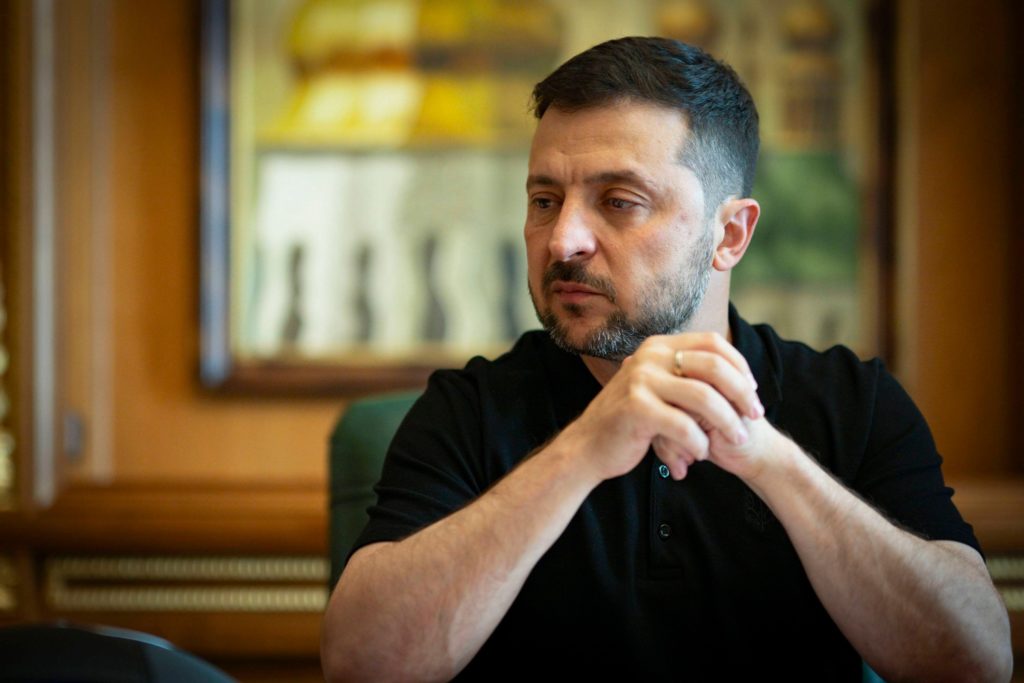
Zelensky
Amid escalating tensions in Eastern Europe, Ukrainian President Volodymyr Zelensky has firmly rejected any proposal to cede the Donbass region as part of a ceasefire deal with Russia. His statement comes amid a fresh Russian offensive and an upcoming summit between U.S. President Donald Trump and Russian President Vladimir Putin, scheduled to take place on American soil.
Zelensky was unequivocal, warning that handing over Donbass—even partially—would pave the way for further Russian attacks. “If we withdraw today, abandoning our fortifications and strategic heights, we would be giving the enemy an opportunity to prepare an even larger offensive,” he said. He also emphasized that any territorial changes must be subject to a national referendum, as mandated by Ukraine’s constitution.
On the battlefield, Russian forces launched a sudden advance near the eastern city of Dobropillia, pushing about ten kilometers in a short span. Zelensky downplayed the immediate impact, asserting that the Russian units involved would soon be destroyed, but acknowledged fighting occurred at multiple points along the front line.
Ukraine also sees this military movement as a symbolic gesture, intended to create an impression that Moscow is gaining ground just before the Trump-Putin meeting. Ukraine, excluded from the summit, fears behind-closed-doors negotiations could legitimize forced redrawing of its borders.
Currently, Russia controls nearly all of Luhansk and approximately 70% of Donetsk—comprising the bulk of Donbass—and holds just under 20% of Ukraine’s territory overall. Zelensky further warned that Moscow is preparing new offensives in areas such as Zaporizhzhia, Pokrovsk, and Novopavlovsk, signaling a potential escalation in the months ahead.
The choice of Alaska as the summit venue was seen by Zelensky as a symbolic win for Putin. “He is stepping out of isolation by meeting leaders on American soil,” he remarked, expressing frustration over Ukraine’s exclusion from the talks.
Meanwhile, Trump recently stated that a peace deal might involve “some territorial exchange,” a remark that alarmed Kyiv and European leaders alike. There is broad concern that any territorial concession would set a dangerous precedent for border changes by force.
Behind the scenes, Ukraine’s allies are mobilizing to influence Trump ahead of the summit. A virtual meeting involving European leaders, NATO, and the United Kingdom is planned to align strategies and emphasize the inviolability of Ukraine’s territorial integrity.
Zelensky’s firm stance makes clear that for Kyiv, Donbass is not a bargaining chip. Against the complex geopolitical backdrop and ongoing military maneuvers, the message is unmistakable: Ukraine’s sovereignty is non-negotiable—even if that means prolonging the conflict.